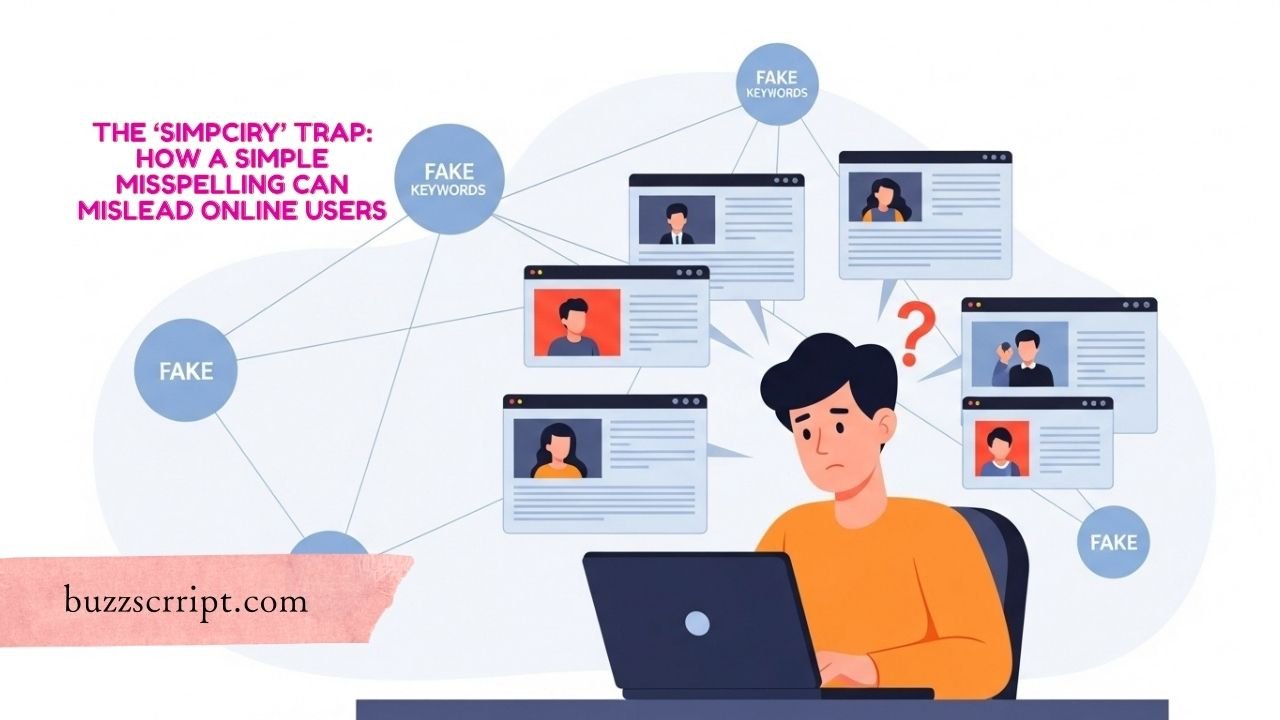
“The ‘Simpciry’ Trap: How a Simple Misspelling Can Mislead Online Users” refers to the growing issue where a small spelling error—like typing “Simpciry” instead of “simplicity”—creates confusion, misdirects searches, and leads users toward inaccurate content, fake trends, or misleading online information.
It highlights how minor typos can be exploited by clickbait pages, deceptive websites, or keyword manipulators to capture traffic and spread misinformation.
The Power of a Single Misspelling
A single wrong word can shift meaning completely. It changes search intent. Users end up on irrelevant pages. Small errors create big confusion. Simple mistakes turn into misleading traps quickly.
How “Simpciry” Diverts Search Traffic?
The misspelled keyword pulls users away from accurate results. It creates false trends. Search engines show random pages. This weakens content trust. Small typos trigger unwanted diversions.
The Rise of Keyword Manipulation
Some creators exploit intentional misspellings. They use them to boost traffic. It generates false visibility. Users fall into content loops. Incorrect keywords become misinformation tools.
Fake Pages Built on Typos
Many fake sites use misspelled terms. Their goal is attention hijacking. They publish misleading content. Users trust wrong information. A simple typo becomes a misdirection strategy.
The Threat of Algorithm Confusion
Search engines get confused by repeated typos. They start ranking low-quality pages. This harms user experience. It creates an unhealthy search space. Mistakes lead to algorithmic noise.
When Simple Errors Boost Clickbait
Clickbait creators use misspellings intentionally. It attracts curious clicks. Users expect clarity but find uncertain content. Trust becomes weaker. Small mistakes feed bigger traps online.
The Impact on Digital Credibility
Consistent typos reduce content authenticity. People hesitate to trust sources. Brands lose authority. Users question accuracy. Misspellings affect overall credibility online.
Read This Blog Also : New Software Bvostfus Python: Why It’s Likely Fake and Misleading
How Typos Spread Misinformation
Wrong words create wrong assumptions. Users misinterpret facts. Confusion spreads quickly. Misleading content becomes normal. A typo turns into viral misinformation.
The Role of User Behavior
People often ignore small errors. They assume the content is correct. This behavior fuels misleading trends. Trust turns into carelessness. Typos grow into search habits.
Why Accuracy Matters Online?
Correct words build trust. They improve information quality. Users find reliable facts. Search engines work properly. Accuracy protects the digital environment.
Recognizing the ‘Simpciry’ Trap
Signs of Misdirection
- Content looks unrelated.
- The spelling seems off or unusual.
- Pages push low-value information.
User Awareness
- Check the correct spelling first.
- Notice suspicious keyword patterns.
- Verify information from trusted sources.
Safe Search Practices
- Use autocomplete suggestions.
- Compare multiple search results.
- Avoid pages with clickbait formatting.
The Psychology Behind Click Errors
Cognitive Slips
- Humans make quick typing mistakes.
- Typos go unnoticed easily.
- Fast browsing causes careless inputs.
Curiosity Traps
- Strange words trigger curiosity.
- Users explore without thinking deeply.
- Clickbait uses this behavior actively.
Visual Misreads
- Typo-based pages mimic real terms.
- Users read familiar patterns instinctively.
- Misinformation hides in visual similarity.
Read This Blog Also : Fake or Real? Checking the ‘Esports News Dualmedia’ Keyword
How Misspellings Affect SEO?
Ranking Distortion
- Wrong keywords impact search placement.
- Engines mis-rank irrelevant sites.
- Overall search quality drops.
Traffic Misalignment
- Visitors land on unrelated pages.
- Engagement becomes poor.
- Bounce rates rise quickly.
Content Manipulation
- Low-quality sites exploit typos.
- They dominate misspelled searches.
- This misguides user intent.
Preventing Typo-Based Misinformation
Education Awareness
- Teach users about spelling accuracy.
- Promote careful search habits.
- Encourage checking source credibility.
Tools & Technology
- Spell-check tools catch mistakes.
- Browsers flag unusual terms.
- AI enhances search corrections.
Community Reporting
- Users report misleading pages.
- Platforms remove fake results.
- Awareness grows collectively.
Building a Safer Search Environment
Better Algorithms
- Search engines improve error detection.
- They reduce typo-based exploitation.
- Results become more accurate.
User Responsibility
- Users must verify spellings.
- Cross-check facts regularly.
- Avoid blindly trusting strange terms.
Creator Transparency
- Authentic creators avoid manipulative typos.
- They prioritize clarity and truth.
- Ethical content builds digital trust.
Frequently Asked Questions
What is the “Simpciry” trap?
It’s a misleading situation created by a simple misspelling that directs users to irrelevant or deceptive online content.
How can a small typo mislead users?
A typo changes search results, leading users toward incorrect, low-quality, or manipulated pages.
Why do creators use misspelled keywords?
Some use them to capture traffic, exploit search algorithms, or boost visibility through misleading tactics.
How can users avoid typo-based misinformation?
By double-checking spellings, using trusted sources, and paying attention to unusual or suspicious keywords.
Does a misspelling affect search engine results?
Yes, misspellings distort rankings, push irrelevant content, and reduce the accuracy of search outcomes.
Final Thoughts
The “Simpciry” trap shows how even the smallest online mistake can lead to confusion, misinformation, and unnecessary distractions.
By staying aware, checking spellings, and recognizing deceptive patterns, users can protect themselves from misleading content and maintain a safer, more reliable digital experience.

I’m a tech enthusiast who simplifies complex topics into clear, helpful information. I create reliable guides and insights to help users stay updated in the fast-moving world of technology.




![225+ Powerful Biblical Names for Girls (With Meanings) – Timeless, Beautiful & Faith-Filled [2026]](https://buzzscrript.com/wp-content/uploads/2026/03/225-Powerful-Biblical-Names-for-Girls-With-Meanings-–-Timeless-Beautiful-Faith-Filled-2026-150x150.jpg)